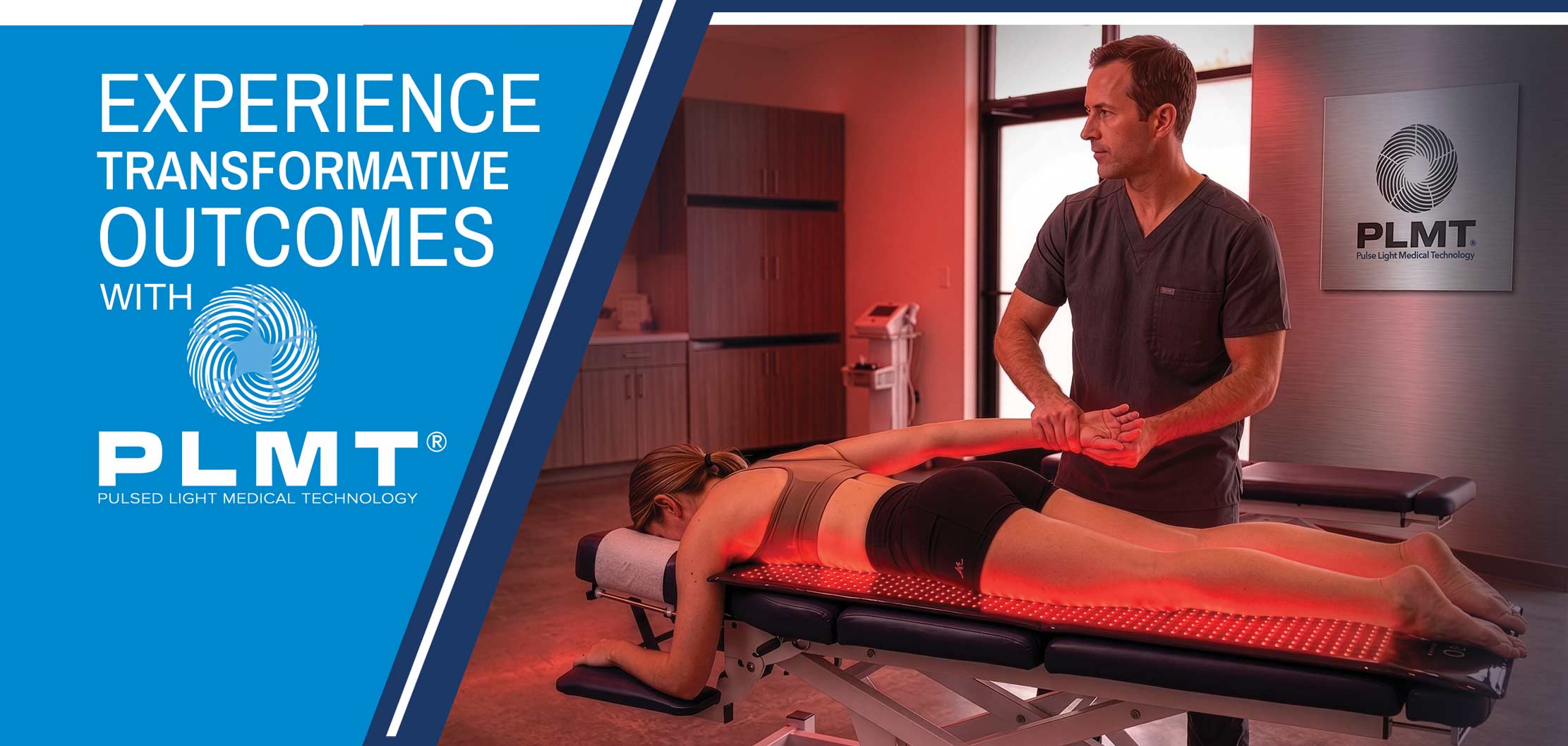
The Science Behind PLMT® — Our Pulsed Light Medical Technology
Pulsed Light Medical Technology (PLMT®) is an advanced therapeutic modality that utilizes specific wavelengths of light delivered in pulses, combining the benefits of red light therapy (RLT) and near-infrared (NIR) therapy while enhancing their effectiveness. PLMT® incorporates polychromatic light, which includes multiple wavelengths, allowing for broader therapeutic applications and deeper tissue penetration compared to traditional RLT/NIR therapies.
The current system combines four wavelengths—660 nanometers in the red range, along with 850, 950, and 1070 nanometers in the near-infrared range—and allows those wavelengths to be delivered simultaneously.
Pulsed Light Medical Technology (PLMT®) evolved from these standard therapies by integrating pulsed light delivery and polychromatic wavelengths, red and near-infrared simultaneously. The incorporation of pulsed light frequencies, such as those from the Nogier and Solfeggio scales, allows for a modulation of energy delivery that can optimize cellular responses and reduce the risk of overheating in tissues (2). The pulsed mode can also enhance the absorption of light by cells, leading to increased efficacy in treatment.
Pulsed Light Medical Technology (PMLT) operates by delivering pulsed light energy that is absorbed by cellular chromophores. This absorption stimulates various biological responses that can lead to several beneficial effects such as:
Enhanced Mitochondrial Function: One of the key benefits of PLMT® is its ability to improve mitochondrial respiration and ATP production. These processes are crucial for maintaining neuronal health. Enhanced mitochondrial function can help mitigate the energy deficits that are often observed in neurodegenerative conditions (Karu, 2010). By boosting the energy production within cells, PLMT® may help sustain neuronal function and delay degeneration.
Reduction of Neuroinflammation: Chronic neuroinflammation is a hallmark of many neurodegenerative diseases, peripheral neuropathy, arthritis conditions and many more. PLMT® may play a role in reducing inflammatory markers and modulating immune responses in the brain. This modulation can promote a healthier neural environment, which is essential for the survival and function of neurons (Barrett et al., 2019).
Promotion of Neuronal Survival: Another significant effect of PLMT® is its ability to reduce oxidative stress and enhance cellular repair mechanisms. This is particularly important in disorders where neuronal loss is prevalent. By promoting neuronal survival, PLMT® can help maintain the integrity of neural networks, which is vital for overall brain function (Karu & Afra, 1997).
Differences Between PLMT® and Monochromatic Systems
Understanding the differences between PLMT® and monochromatic systems like Red Light Therapy is crucial for appreciating the potential of Pulsed Light Therapy/Pulsed Light Medical Technology in treating many complex conditions.
Wavelength Diversity:
PLMT® employs a polychromatic system, which allows for the simultaneous use of multiple wavelengths. This capability enables it to target various cellular responses and pathways, potentially leading to improved therapeutic outcomes. The diverse wavelengths can engage different chromophores and cellular processes, producing synergistic effects that enhance treatment efficacy (Karu, 2010). This multifaceted approach is particularly beneficial for many complex conditions where multiple pathways may be involved in disease progression.
Red Light Therapy (LLLT), on the other hand, is a monochromatic system that typically utilizes a single wavelength of light. While effective in specific applications, this limitation may reduce its overall efficacy (Hamblin, 2017). The narrow focus of monochromatic systems may not adequately address the multifactorial nature of many complex diseases.
Mechanism of Action:
PLMT's ability to engage multiple pathways allows it to address the multifactorial nature of many conditions more effectively. The simultaneous stimulation of various biological processes can lead to better outcomes compared to the narrower focus of monochromatic systems. This comprehensive approach is especially essential for tackling the complexities of conditions such as MSA, where multiple factors contribute to disease progression.
PLMT® operates by delivering pulsed light energy that is absorbed by cellular chromophores. This absorption stimulates various biological responses that can lead to several beneficial effects including:
Deeper Tissue Penetration: PLMT® utilizes a broader range of wavelengths, allowing for deeper penetration into tissues. This results in enhanced therapeutic effects and improved efficacy in treating various conditions.
Enhanced Mitochondrial Function: One of the key benefits of PLMT® is its ability to improve mitochondrial respiration and ATP production. These processes are crucial for maintaining neuronal health. Enhanced mitochondrial function can help mitigate the energy deficits that are often observed in neurodegenerative conditions, including MSA (Karu, 2010). By boosting the energy production within cells, PLMT® may help sustain neuronal function and delay degeneration.
Enhanced Cellular Response: Pulsed delivery of light synchronizes with cellular rhythms, enhancing mitochondrial function. This can increase ATP production and stimulate the generation of reactive oxygen species (ROS), which are crucial for cellular repair and regeneration.
Stronger Anti-Inflammatory Effects: PLMT® has been shown to have more pronounced anti-inflammatory effects than traditional therapies. The modulation of light intensity and frequency can lead to a significant reduction in pro-inflammatory cytokines, promoting faster healing.
Reduction of Neuroinflammation: Chronic neuroinflammation is a hallmark of many neurodegenerative diseases, including MSA. PLMT® may play a role in reducing inflammatory markers and modulating immune responses in the brain. This modulation can promote a healthier neural environment, which is essential for the survival and function of neurons (Barrett et al., 2019). By addressing inflammation, PLMT® may help slow the progression of neurodegenerative disorders.
Promotion of Neuronal Survival: Another significant effect of PLMT® is its ability to reduce oxidative stress and enhance cellular repair mechanisms. This is particularly important in neurodegenerative disorders where neuronal loss is prevalent. By promoting neuronal survival, PLMT® can help maintain the integrity of neural networks, which is vital for overall brain function (Karu & Afra, 1997).
Cumulative Healing Effects: The use of multiple wavelengths in PLMT® promotes a cumulative effect on healing and tissue regeneration, which can lead to better overall outcomes compared to single-wavelength therapies.
Safety and Comfort: The pulsed nature of PLMT® allows for a controlled application of energy, minimizing heat generation during treatment. This enhances patient safety and comfort, reducing the risk of thermal injury and improving the overall treatment experience.
Versatility in Treatment: PLMT® can address a broader range of conditions, including chronic pain, inflammation, wound healing, and skin rejuvenation, making it a versatile option for practitioners.
Improved Patient Outcomes: Clinical studies have demonstrated the effectiveness of PLMT® in alleviating pain, improving function in chronic conditions, and promoting tissue healing, leading to better patient satisfaction and outcomes.
Attraction of New Patients: As a cutting-edge technology, PLMT® can enhance a practice's reputation and attract new patients seeking advanced treatment options, positioning practitioners at the forefront of innovative healthcare solutions.
Pulsed Light Medical Technology (PLMT®) represents a significant advancement in therapeutic light applications, offering enhanced efficacy, safety, and patient satisfaction.
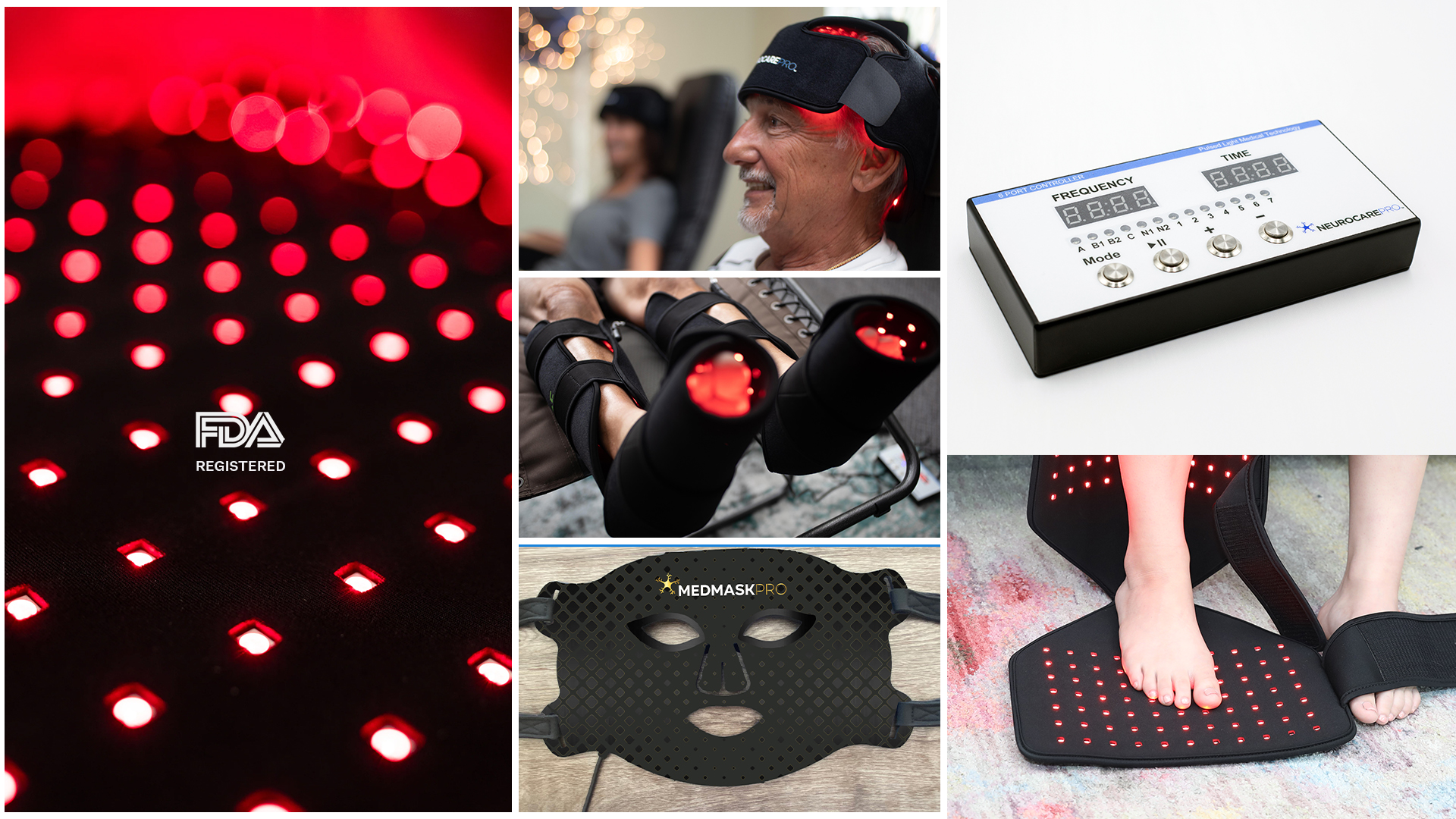
Experience the transformative power of Neurocare Pro's Elite Pulsed Light Medical Technology systems — a groundbreaking pulsed Red Light & Near-Infrared solution designed to elevate your health and wellness journey to a whole new level. Our state-of-the-art PLMT® PBM devices harness the healing energy of red and near-infrared light combined with precise targeted pulsated frequencies to penetrate deep into your body's tissues, stimulating cellular repair, enhancing muscle recovery, reducing inflammation, and promoting overall well-being.
Whether you're a doctor, health practitioner, or health enthusiast looking to speed up your recovery process or you're simply focused on anti-aging and skin rejuvenation, our PBM/Pulsed Light Medical Technology, Red Light Therapy devices offer a non-invasive, safe, and effective treatment option. With FDA Registration, these devices stand at the forefront of medical technology, providing you with a trusted solution for a wide range of health concerns.
What Makes Neurocare PRO Devices Special?
It starts with our advanced surface-mounted diode (SMD) technology, featuring 660nm, 850nm, 950nm, and 1070nm diodes engineered for optimal penetration into bone, deep tissue, shallow tissue, and skin surface.
That's Just the Beginning
All Neurocare PRO products feature advanced controllers, automatic frequency programs, and pulse rate technology designed to help deliver optimal therapeutic benefits. When paired with our SMD technology, this specific pulse rate technology is designed to help support the body's nitric oxide release — one of the core biological mechanisms recognized by the 1998 Nobel Prize in Physiology or Medicine.
Strict Manufacturing Process
We understand that the effectiveness and safety of our products directly impact the well-being of our users, which is why we've instituted rigorous quality assurance measures at every stage of production. We hold ourselves to this standard not just as a benchmark, but as a promise to our customers. It's this commitment that sets us apart and reflects our dedication to reliability, quality, and excellence in Photobiomodulation therapy.
FDA Class II Medical Registration
Our path to FDA Class II registration involved comprehensive documentation, rigorous testing, and in-depth review of our manufacturing processes, ensuring our devices are designed to deliver therapeutic benefits while adhering to the strict safety guidelines set forth by the FDA. This achievement reflects our ongoing commitment to innovation, patient safety, and the advancement of health and wellness technologies.
Our mission goes beyond simply supplying the market with low-cost, generic products. Instead, we are dedicated to offering premier Photobiomodulation (PBM) devices while staying at the forefront of the field's ongoing research and development. This commitment helps ensure our technology remains accessible and beneficial worldwide, supporting positive health outcomes.
Growth & Research
The global market for PBM devices is experiencing exponential growth, a testament to the therapy's effectiveness and its acceptance across diverse medical fields. This growth is further fueled by technological advancements that make the devices more accessible to both practitioners and consumers. Moreover, the therapy's ability to provide relief without the side effects associated with conventional treatments is significantly contributing to its popularity.
As PBM continues to evolve, ongoing research is pivotal in unlocking its full potential. Studies are continuously being conducted to explore new applications of the therapy and to optimize protocols for existing treatments. This research not only reinforces the scientific basis of PBM but also ensures that its application is grounded in evidence-based practice, enhancing its credibility and adoption rate globally.
For those interested in delving deeper into the scientific research backing PBM, pulsed light (PLMT®) and red light therapy, here are some valuable sources:
Here are some research links from accredited sources to learn more:
- Photobiomodulation: Mechanisms, Efficacy, and Applications in the Journal of Clinical and Aesthetic Dermatology:
- Effect of Pulsing in Low-Level Light Therapy: in the Laser Surgery Medical Journal accessed from National Institutes of Health at: https://pmc.ncbi.nlm.nih.gov/articles/PMC2933784/
- A Controlled Trial to Determine the Efficacy of Red and Near-Infrared Light Treatment in Patient Satisfaction, Reduction of Fine Lines, Wrinkles, Skin Roughness, and Intradermal Collagen Density Increase in the Photomedicine and Laser Surgery journal:
- Effects of Low-Level Laser Therapy on the Progression of Post-Exercise Muscle Fatigue in the American Journal of Physical Medicine & Rehabilitation:
These links lead directly to the studies and reviews that provide a comprehensive overview of the effectiveness and scientific foundation of PBM/pulsed light (PLMT®), red light/NIR (RLT/NIR) therapy, reflecting its significant growth and potential in the global health and wellness landscape.